Jiu Jitsu Grip Strength That Works on the Mats
A good grip can make a simple collar-and-sleeve guard feel frustratingly difficult to pass. It can also disappear halfway through a hard round when your forearms fill up, your fingers start opening, and the same grip that felt secure during drilling suddenly feels useless. Jiu Jitsu grip strength is not just about squeezing harder. It is the ability to establish, adjust, and release useful grips repeatedly without spending all your energy in the first exchange.
For gi training, grip endurance matters constantly: breaking posture from closed guard, holding a sleeve while entering an arm drag, controlling a pant cuff during a guard pass, or keeping a collar grip long enough to finish a choke. No gi still asks plenty from the hands and forearms, but the demands are different. Wrist control, head control, underhooks, and connection through the palm usually matter more than hanging onto fabric.
The goal is not to build a crushing handshake. The goal is to make your grips more useful on the mats while keeping your hands healthy enough to train consistently.
What Jiu Jitsu Grip Strength Actually Means
Grip strength in Brazilian Jiu Jitsu has several parts. The first is the initial squeeze or clamp needed to take hold of a sleeve, lapel, wrist, or ankle. The second, and usually more valuable part, is endurance: maintaining enough tension through a long sequence without your forearms burning out. Finally, there is grip control, meaning the ability to loosen, regrip, and change angles at the right time.
That last piece separates productive gripping from exhausting yourself. A white belt often holds every grip as if letting go means losing the round. An experienced grappler may take a grip, use it to force a reaction, then release it the moment it stops serving the position. In a hard sparring round, that economy can matter more than raw hand strength.
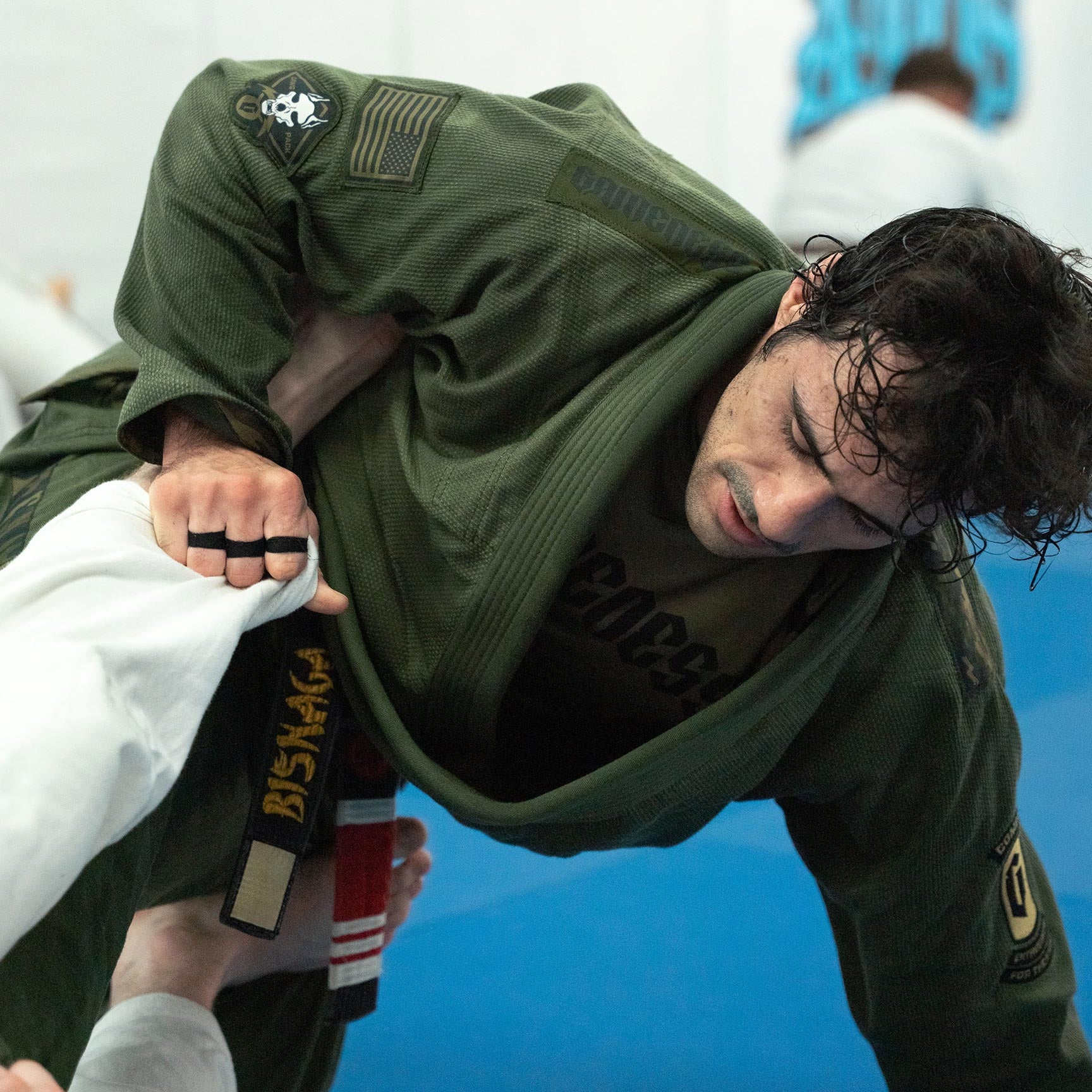
Consider a common collar-sleeve exchange. If you lock your hand into the opponent's sleeve and pull with your arm alone, your forearm will work overtime. If you create an angle with your hips, keep your elbow connected, and use your legs to off-balance them, the grip becomes far cheaper. Stronger hands help, but better positioning makes those hands last.
Build Grip Strength From Your Regular Training First
The most specific grip work is still live Jiu Jitsu. Before adding extra exercises, look at how you train. Are you spending purposeful time in positions where grips matter, or are you treating every round like a scramble?
During technique drilling, make grips part of the repetition. On a scissor sweep, establish the collar and sleeve with intention before you move your hips. When practicing a knee-cut pass, pay attention to whether your pant or collar control is actually preventing the guard player from framing and recovering. Repeating clean, correctly timed grips teaches your hands what they need to do under pressure.
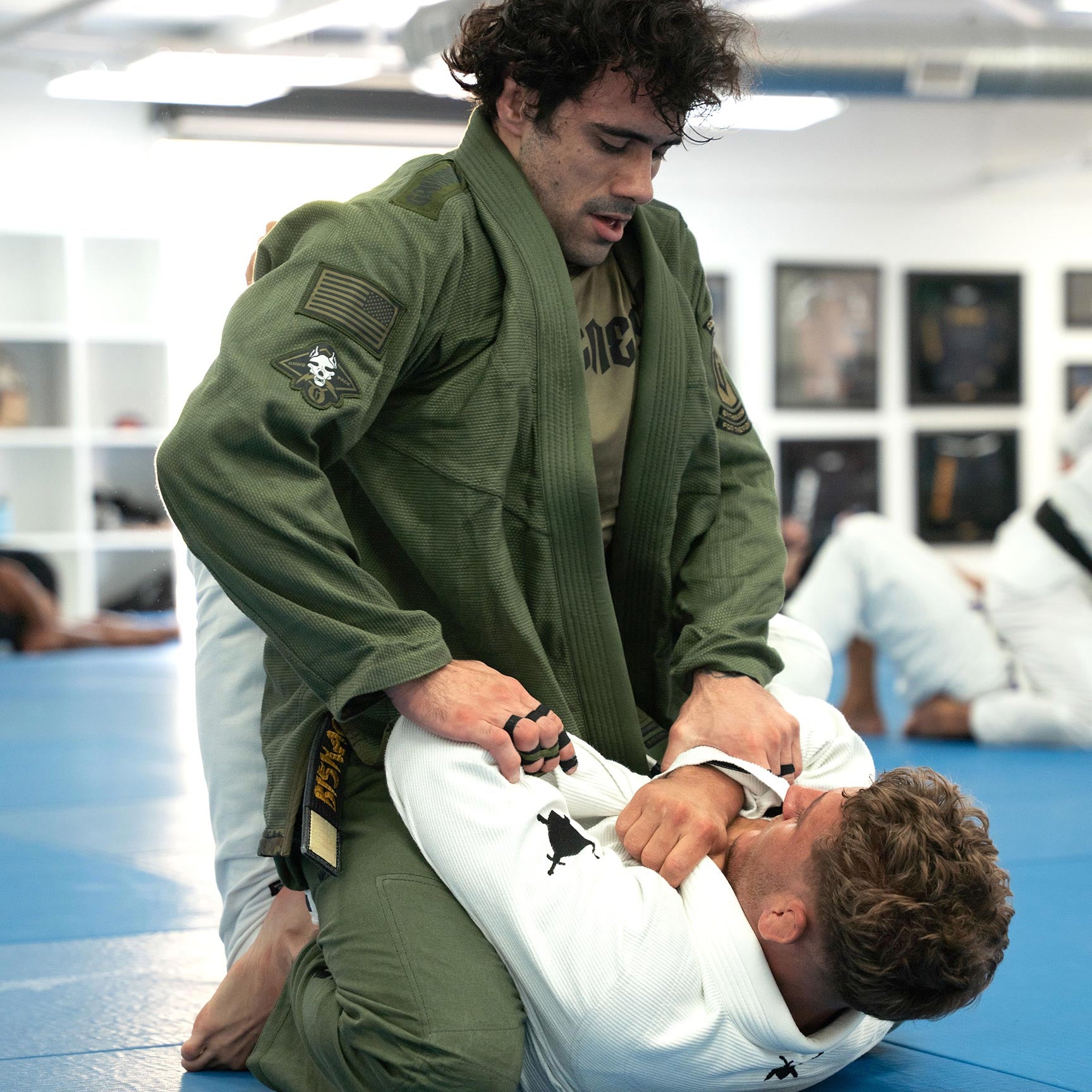
Positional sparring is especially useful. Start in closed guard with the top player trying to stand and open while the bottom player works posture control. Begin from seated guard and give the guard player a clear goal of controlling one sleeve and one ankle. Work from a passing position where the top player must clear a pant grip before settling chest-to-chest. Short rounds let you accumulate quality gripping time without turning every session into a forearm endurance test.
There is a trade-off here. More grip-intensive rounds can improve endurance, but adding too much on top of several gi classes may leave your hands constantly irritated and your grip flat during your best training days. If you train gi four or five times a week, the right answer may be better grip discipline, not more supplemental grip work.
Stop Death-Gripping Every Exchange
A useful rule is to grip with a purpose. Ask what the grip is doing right now: Is it breaking posture? Preventing a pass? Setting up a sweep? Removing a post? If it is not creating a meaningful problem, reset rather than hanging on.
This is easy to test during rolling. Pick one round and consciously release grips that have stopped controlling your partner's posture or movement. You may initially feel less secure. Over time, you will notice your hands stay fresher for the moments that matter, such as controlling the far sleeve before an omoplata or keeping a cross-collar grip while finishing from mount.
Supplemental Work That Carries Over to the Gi
A small amount of direct grip training can help, particularly for practitioners who train only a couple of times each week or who notice their forearms failing before the rest of their body. Two short sessions per week is enough for most people. Put them after a lighter strength session or on a day that is not followed by your hardest gi class.
Towel hangs are a practical option. Loop a sturdy towel over a pull-up bar, take a comfortable hold, and hang with your shoulders active rather than collapsing into them. The towel forces the fingers to work in a way that feels closer to holding a thick lapel or bunched sleeve than a standard bar does. Start with a few controlled holds of 10 to 20 seconds. Build time gradually, and stop before your grip is so fried that tomorrow's training suffers.
Gi jacket or gi sleeve pulls can also be useful when done with control. Secure the fabric around a sturdy anchor, take a sleeve-style grip, and perform rows while keeping the wrist neutral. This is not about yanking as hard as possible. Think of the movement as practicing the connection used to pull an opponent forward from seated guard or draw their elbow across the centerline for an arm drag.
Farmer carries build general hand and forearm endurance while also training posture and bracing. Carry moderately challenging weight with tall posture and steady steps. They do not perfectly duplicate a gi grip, but they are simple, scalable, and less repetitive than endless squeezing exercises.
Finger extension work deserves a place as well. Open your fingers against a light resistance band, or simply spread and extend them with deliberate control after gripping work. Jiu Jitsu asks for a lot of closing and flexing. Giving the opposite movement some attention can make your hands feel better between sessions without turning recovery into a complicated project.
Avoid chasing fatigue for its own sake. High-rep grippers and daily max hangs can leave your hands tired without doing much for the positions you actually use. If your fingers ache when making a fist, you are struggling to hold ordinary grips in warm-ups, or your elbows are increasingly sore, reduce the extra volume and reassess.
Use Better Grip Choices During Sparring
Grip endurance improves faster when your choices are efficient. On top, use grips that connect your opponent's body to the floor or limit their defensive frames. A collar grip can be valuable, but not if it pulls your elbow away from your ribs and lets them sit up. A pant grip can stop guard retention, but it becomes costly when you reach too far and let your posture fold.
On bottom, avoid treating every sleeve grip as permanent. In open guard, a sleeve grip paired with a foot on the hip can create distance and angle. If your partner strips it, transition to an ankle, wrist, or collar connection instead of immediately trying to win the same grip back with brute force. The ability to move between controls is a form of grip strength that does not show up on a hand dynamometer.
Competition adds another layer. Adrenaline makes people squeeze too hard early, especially in the first grip exchange. If you compete, use some of your hard rounds to practice a calmer start: establish one meaningful connection, move your feet or hips, and make the opponent react before you commit to a prolonged pulling battle. Saving your forearms in the opening minute can change the last minute of the match.
A Simple Weekly Approach
For someone training two or three times per week, one or two supplemental sessions can fit well. Keep each session short: a few towel hangs, a few sets of carries or fabric rows, then light finger extension work. Progress one variable at a time, whether that is a slightly longer hang, an additional set, or more load on carries.
For someone training gi most days, use supplemental work more sparingly. One brief session, or even just a few easy sets after strength training, may be plenty. Your hands already get a high volume of specific work from drilling, grip fighting, and sparring.
The best test is not whether you can hang from a towel longer than your training partner. It is whether you can keep useful grips late in class, regrip without panic, and still have enough in your hands to finish the technique you created. Build your grip work around that standard, then let your time on the mats teach you where it needs to improve.
Shop Our New Releases
Fast & Free Shipping!

Fast & Free Shipping!
Fast & Free Shipping!
Fast & Free Shipping!
Fast & Free Shipping!

Fast & Free Shipping!