Why Your BJJ Drills Aren't Working (And How to Fix Them)

A good drill should make a moment from live rolling feel familiar. Maybe it is the instant your partner clears your knee shield, the beat before they establish an underhook from half guard, or the scramble after a failed single-leg. Grappling drills are where you give those moments enough quality repetitions that you stop having to invent an answer under pressure.
That does not mean drilling needs to be robotic. In Brazilian Jiu Jitsu, the best drilling sits between two extremes: mindlessly repeating a move against a compliant partner and trying to solve everything at full sparring pace. The goal is to build clean mechanics first, then add the timing, resistance, and decisions that make a technique usable when someone is actively trying to stop it.
What Grappling Drills Should Actually Improve
A technique can look sharp during the instruction portion of class and disappear the second a round starts. Usually, that is not because the student has a bad memory. It is because they have not trained the entry, reaction, and follow-up enough times to recognize the opening at speed.
Useful grappling drills improve one or more of four things: movement quality, positional awareness, timing, or decision-making. A hip escape drill, for example, is not just a warmup staple. It teaches you to create space without turning your back or reaching blindly. That same movement shows up when recovering guard from side control, retaining a seated guard, and re-guarding after a mount escape.
The drill should also have a clear job. If you are working on a scissor sweep, decide whether the focus is breaking posture, getting the sleeve-and-collar connection, loading the opponent's weight, or coming up safely after the sweep. Trying to fix every piece at once often produces a lot of movement without much improvement.
For newer white belts, drilling establishes the basic map of Jiu Jitsu: where your elbows belong, why inside position matters, and how to move without giving away your back. For experienced students, the value shifts toward details and reactions. A brown belt may drill the same arm-drag sequence as a beginner, but use it to sharpen hand-fighting timing, connect it to a body lock, and prepare for the opponent's most common defensive response.
Start With a Technical Repetition
The first stage is cooperative. Your partner gives you the position and lets you complete the technique correctly, at a pace slow enough to notice errors. This is where you should be particular about grips, head position, elbow position, and balance.
Take a basic knee-cut pass. Before adding resistance, make sure the passing knee is not floating in open space, the underhook is meaningful, and your chest is controlling the upper body rather than leaning away. If your partner can easily frame across your neck because your posture is wrong, doing another 30 fast repetitions will only rehearse the problem.
Technical repetitions are especially useful after learning something new in class. Do a few clean reps on each side, pause when necessary, and ask your partner whether the pressure and alignment feel right. This is not the glamorous part of training, but it is where reliable habits start.
Add a Realistic Reaction

Once the movement is clean, give your partner one specific job. This turns a static technique into a conversation without making the drill chaotic.
If you are drilling a toreando-style pass, your partner might focus only on recovering inside position with a shin frame. Your job is to control the legs, redirect their hips, and settle into side control without rushing past the position. If they recover guard, reset. If you pass, hold the position for a few seconds before starting again.
The same approach works well from bottom. When drilling an elbow escape from mount, have the top player maintain a solid mount and respond by widening their base or trying to climb higher. The bottom player learns that the first escape attempt may not work exactly as planned. They may need to combine the elbow escape with a bridge, recover half guard, or protect their neck before moving again.
This kind of drill teaches a useful Brazilian Jiu Jitsu lesson: positions rarely stay still. A move is usually not one perfect motion. It is a sequence of adjustments based on what your partner gives you.
Use Progressive Resistance, Not Random Resistance
“Add resistance” is good advice only when the resistance is appropriate. If your partner goes from fully cooperative to trying to win a round, the drill often breaks down before either person learns much.
Start around 20 to 30 percent resistance, where the defender makes the correct response but still allows the attacker to recognize and execute the answer. Increase gradually as the movement becomes dependable. At higher levels, the defender can choose between two or three realistic reactions, which forces the attacker to read rather than predict.
For example, when drilling a front headlock attack, the partner may either keep their elbow tucked, reach to the far leg, or begin circling out. You do not need a dozen options. Two or three common reactions are enough to make the entry honest and help you connect your guillotine, spin behind, or go-behind to the position in front of you.
Positional Sparring Is the Bridge to Rolling
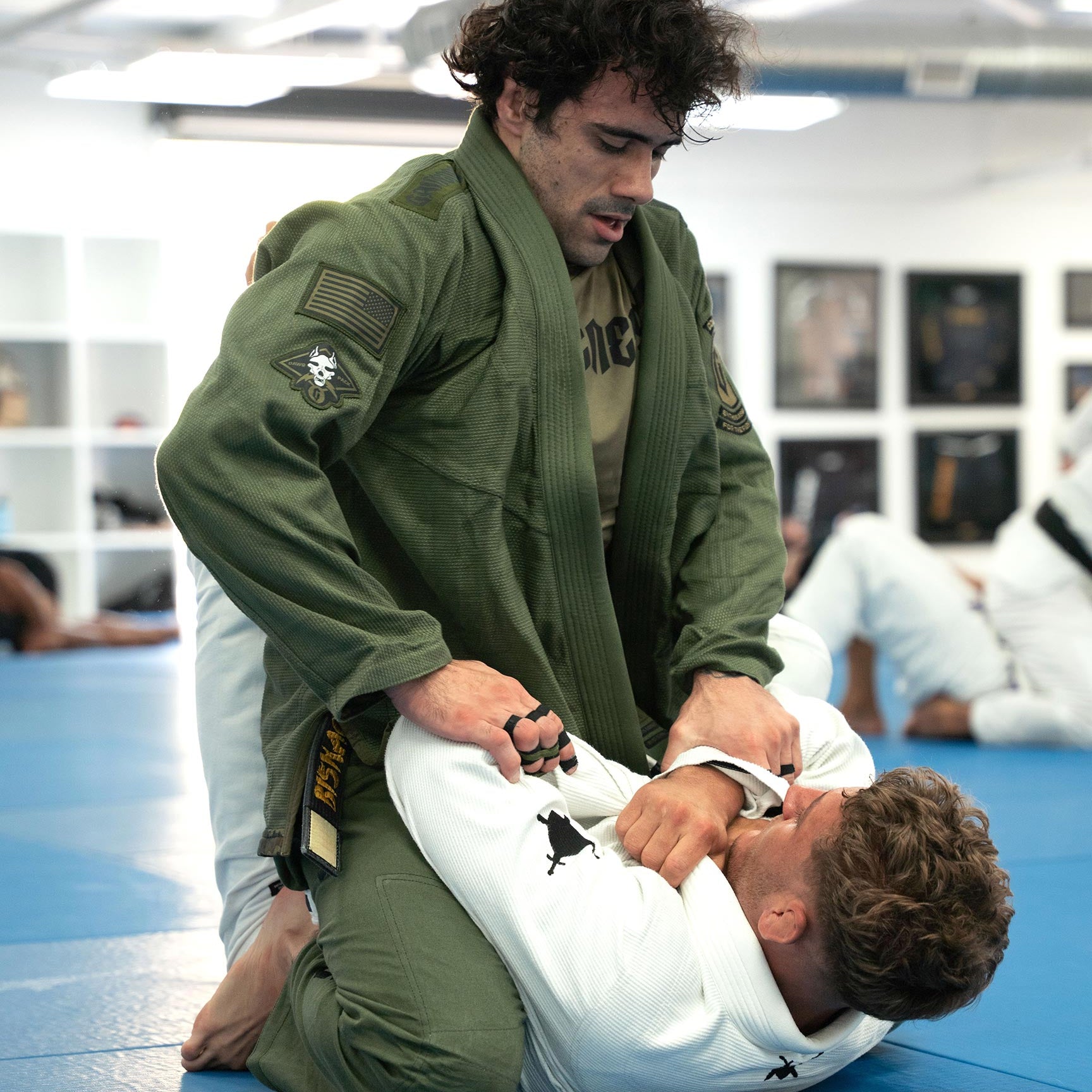
Positional sparring is one of the most efficient forms of drilling because it preserves a narrow goal while giving both people permission to resist. Start in a specific position, set a short round, and define what counts as success.
A simple example is three minutes starting in closed guard. The bottom player works to sweep, submit, or take the back. The top player works to open the guard and pass. When someone reaches their goal, reset immediately. There is no need to spend a minute wrestling through a position that has nothing to do with the day's focus.
Other productive starting points include back control with one hook in, headquarters passing, half guard with an underhook battle, or side control where the bottom player begins with a frame in place. These are positions that show up repeatedly in class rounds and competition matches.
Positional sparring also helps students who freeze during open rolling. A brand-new student may not know what to do from every possible position, but they can spend several short rounds learning one job: keep their elbows in and recover guard from side control. That targeted experience builds confidence more effectively than telling them to “just roll more.”
Drill Both Sides, but Give Attention Where You Need It
Most people have a preferred passing direction, a favorite hip for technical standups, and a side they trust for submissions. There is nothing wrong with having an A-game. Competition often rewards the ability to force your best sequence.
Still, ignoring the other side can create obvious gaps. If you only knee-cut to your right, a training partner will eventually start steering you left. If you can only escape mount toward one shoulder, your defensive options become predictable.
A practical approach is to drill both sides for basic movements and high-frequency techniques, then spend extra time on the side that needs work. You might do five controlled repetitions of a tripod sweep on your strong side and eight on the weaker side. The point is not perfect symmetry. It is having enough competence that your weaker direction is no longer an easy answer for your training partners.
Keep Drilling Honest With Clear Feedback
Training partners can help each other improve by being specific. “That felt tight” is useful, but “your crossface disappeared when you switched your hips” is better. The person drilling should also pay attention to what the partner feels. If a sweep only works because the partner is sitting upright with their hands posted poorly, it may need a more realistic setup.
Academy culture matters here. The best drilling partners are not the ones who let every technique work, nor the ones who turn every rep into a stubborn fight. They understand the assignment. They provide the right reaction, protect each other, and raise the difficulty when the movement is ready for it.
If you train with the same people regularly, take advantage of that. Ask a partner to give you the guard-retention reaction that always slows your passing. Ask them to recreate the defensive posture that made your armbar fail during last week's rounds. That turns a frustrating live-roll moment into a focused training project.
Build a Short Drilling Plan You Will Actually Use
You do not need an extra hour after every class. Ten focused minutes can be enough if you arrive with a purpose. Pick one position that appeared in your recent rolls, choose a technique or transition from that position, and decide how it will progress from cooperative reps to resistance.
For instance, if opponents keep flattening you in half guard, spend a few sessions drilling the underhook battle, coming up to a single leg, and recovering a knee shield when the underhook is lost. Follow it with short positional rounds from half guard. Over time, you will start recognizing the posture and grip fight earlier instead of waiting until you are already stuck.
Keep the focus long enough to see a change. Switching techniques every session can be fun, but it makes it hard to develop timing. Many competitors spend a training block returning to the same guard pull, pass, or escape because they want it available under fatigue, not just during a demonstration.
The next time a move fails in sparring, do not write it off as a bad technique. Identify the exact moment it broke down, recreate that moment with a trusted partner, and drill the answer until it feels less like a guess. That is how practice starts carrying over when the round gets real.
Shop Our New Releases
Fast & Free Shipping!



Fast & Free Shipping!
Fast & Free Shipping!
Fast & Free Shipping!

Fast & Free Shipping!

Fast & Free Shipping!