Butterfly Guard Sweeps That Work in Live Rolls
A butterfly sweep that works once during compliant drilling is not necessarily a sweep you can count on when your training partner is driving forward, posting wide, and trying to smash your hooks flat. Reliable butterfly guard sweeps come from creating the right reaction first: breaking posture, controlling an upper body connection, and taking away the post that would stop the sweep.
Butterfly guard is one of the most useful seated guards in Brazilian Jiu Jitsu because it gives you offense without needing to lie flat underneath someone. It works in gi and no-gi, scales from white belt fundamentals to high-level competition, and connects naturally to wrestle-ups, submissions, and back takes. The catch is that the position is detail-heavy. If your opponent owns inside position and your knees are pinned to the mat, your butterfly guard is usually just a short stop on the way to getting passed.
The Mechanics Behind Effective Butterfly Guard Sweeps
The classic butterfly sweep is not about trying to lift a heavier partner with your legs. It is about loading their weight onto you, turning them over the space where they cannot post, and following their momentum into top position.
Start with your hips close enough that your butterfly hooks can elevate their base. Your feet should be active inside their thighs, with your knees pointed upward rather than flared uselessly toward the floor. A common white belt mistake is sitting too far away and reaching for grips. From that distance, your opponent can straighten their arms, back out, or simply push your knees down.
Your upper body connection matters just as much as the hooks. In the gi, an underhook paired with a collar or sleeve control gives you a strong way to pull your partner forward and turn their shoulder line. In no-gi, an underhook, overhook, collar tie, wrist control, or body lock can do the same job. You do not need one universal grip. You need a connection that keeps their chest close while preventing them from posting freely.
The direction of the sweep is usually diagonal, not straight backward. If you are sweeping them to your right, pull their weight toward that side, fall slightly toward your left shoulder, and elevate with the hook under their right thigh. Your other leg helps steer and keeps their base from widening. Think about tipping a stool by removing one leg, not bench-pressing the whole stool overhead.
The Classic Butterfly Sweep
The classic version deserves serious drilling because its mechanics show up everywhere else in butterfly guard. Secure an underhook on one side and control high on the back, belt line, or collar depending on the ruleset and grips available. Pull your partner forward until their hands become light and their hips are carrying weight over your hooks.
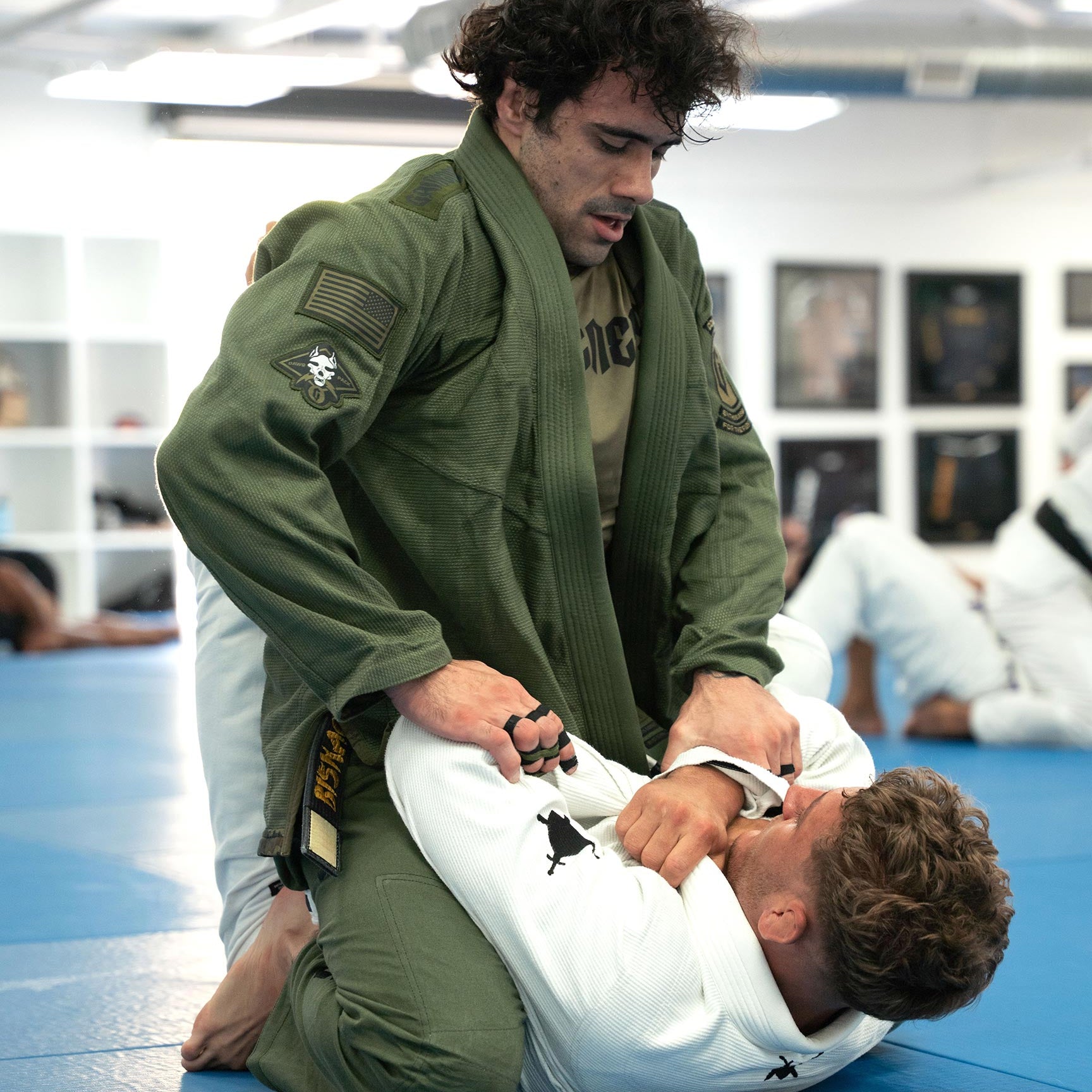
To sweep toward the underhook side, angle your body slightly away from that side and bring their weight across you. Elevate with the hook on the sweep side while turning their shoulder toward the mat. Keep the underhook tight. If there is daylight between your chest and their torso, they can post an arm or recover their base before they go over.
As they fall, stay connected and come up immediately. Many students execute the tipping motion, then pause on their back while their partner scrambles. In a live round, treat the sweep and the top-position recovery as one movement. Your first goal might be closed guard or half guard top, but if you can rise directly into a tight passing position, even better.
A useful academy drill is to have your partner begin with their hands on your shoulders and moderate forward pressure. Your job is not to sweep immediately. First make them post a hand by pulling them forward, then identify which hand is no longer available to stop the sweep. This teaches the real timing behind the technique.
Why the Classic Sweep Gets Stuffed
The most common problem is trying to sweep an upright opponent. If their hips are behind their knees and their head is tall, they are not loaded onto your hooks. Pull them into you, use your grips to fold their posture, or threaten another attack that makes them react forward.
Another issue is sweeping toward a posted hand. If their right hand is already on the mat and you try to send them right, you are asking them to use the exact post they have prepared. Change sides, drag the arm, control the wrist, or create an angle that clears the post first.
Arm Drag to Butterfly Sweep
The arm drag is one of the best answers when a seated opponent is cautious and keeps their weight back. Rather than chasing a sweep against a stable base, pull one arm across your centerline and move your body to the outside. In the gi, a sleeve grip helps. In no-gi, wrist control and a tight pull at the triceps are often enough.
The arm drag has several good outcomes. If your partner leaves their shoulder exposed, you may come up to the back. If they square back up hard, their weight often shifts forward and gives you the classic butterfly sweep. If they pull the dragged arm away and post, you have created a path to a single-leg style wrestle-up.
During sparring, do not treat the arm drag as a trick you attempt once. Use it to make your partner defend. For example, against a kneeling passer who keeps both elbows tight, drag their right arm across, scoot to your right, and watch their response. When they circle their arm back, their base frequently narrows for a moment. That is often the window for your hook to lift and turn them.
Shoulder Crunch and Overhook Options
When an opponent pressures heavily into your butterfly guard, an overhook or shoulder crunch can be more useful than fighting for an underhook. By wrapping over their arm and pulling their shoulder toward you, you can limit their ability to post on that side. Your head position and chest connection need to stay tight, especially against a partner who is trying to pressure pass.
From a shoulder crunch, the sweep is usually less about a big lift and more about folding their upper body over the trapped shoulder while you elevate the near leg. It can also expose the arm for attacks, which makes the sweep more believable. A training partner who is worried about their arm is less free to post and base correctly.
This is not always the best option against someone with a very low head and strong crossface pressure. If they have already collapsed your posture and flattened your hooks, recover frames and hip movement before forcing an overhook attack. Butterfly guard rewards early reactions. Waiting until you are almost passed makes every sweep harder.
Connect Sweeps to Wrestle-Ups
Modern butterfly guard works best as a decision tree rather than a collection of isolated moves. If your opponent leans forward, elevate and sweep. If they pull back, follow them into a wrestle-up. If they post a hand, attack the side without the post. If they stand, transition to a guard that gives you better access to their legs or off-balancing angles.
A simple example is a seated guard exchange in no-gi class. You establish inside position and threaten to pull your partner forward. They respond by backing their hips away to avoid the butterfly sweep. Instead of hanging onto their upper body and getting stretched out, post one hand behind you, come up to a single leg, and drive them back toward the mat. The original sweep threat created the opening.
For competitors, this connection is especially useful near the edge of the mat. A failed sweep attempt that leaves you flat can cost position. A controlled wrestle-up, however, can keep you engaged and moving toward top position without gambling on a big elevation.
Drilling Butterfly Guard Sweeps for Timing
Start with clean technical repetitions, but do not stay there too long. Butterfly guard needs resistance and realistic reactions. After you understand the movement, ask your partner to give one of three responses: pressure forward, posture back, or post a hand. Your job is to choose the appropriate sweep, arm drag, or wrestle-up rather than repeating a predetermined motion.
Positional sparring is one of the fastest ways to improve. Begin with one partner seated with butterfly hooks and the other on both knees. Give the bottom player a goal of sweeping, taking the back, or coming up on a single leg. Give the top player a goal of clearing the hooks and passing. Short rounds force you to recognize posture and balance instead of waiting for the perfect setup.
It also helps to train both sides. Most people have a preferred underhook and sweep direction, but experienced training partners notice that quickly. Spending a few rounds deliberately attacking your weaker side will feel clumsy at first, then make your main side harder to defend because you can switch directions without resetting.
The best butterfly guard sweeps do not feel like strength contests. Build the connection, make your partner choose a reaction, and sweep into the space their reaction gives you. Bring that approach into your next open mat, stay patient when the first attempt stalls, and you will find that butterfly guard starts creating opportunities long before anyone actually hits the floor.
Shop Our New Releases
Fast & Free Shipping!
Fast & Free Shipping!
Fast & Free Shipping!
Fast & Free Shipping!
Fast & Free Shipping!

Fast & Free Shipping!