Open Guard Retention Drills That Work Under Pressure
A passing round can feel fine right up until someone clears your feet, wins the inside space at your hips, and starts connecting chest to chest. That moment is why open guard retention drills matter. Good retention is not one magic movement or a flexible inversion. It is the ability to recognize which line is being threatened, put your body back between the passer and your torso, and recover a guard you can actually use.
For a newer white belt, that may mean learning not to leave both legs extended while a partner circles around them. For an experienced competitor, it may mean recovering inside position against a tight headquarters passer without giving up the underhook. The principles are the same. Your drills should build timing, posture, frames, and decision-making that hold up once your training partner stops cooperating.
What Open Guard Retention Is Really Training
Open guard retention is often described as keeping your opponent from passing. That is true, but it can make the job sound too broad. In practice, you are managing a few specific problems: distance, angle, inside position, and connections.
Distance keeps a standing passer from collapsing onto your hips. Your feet, shins, and grips help create it. Angle keeps you from lying flat while someone walks around your legs. A small hip escape or shoulder adjustment can be more useful than a big, late movement. Inside position means your knees, shins, or feet are back between you and the passer. Connections are the grips, hooks, frames, and leg positions that give your guard enough structure to attack or reset.
A common mistake is trying to preserve the same guard at all costs. If your De La Riva hook is being stripped and the passer is closing distance, forcing it can put you behind. Often the right answer is to let that guard go and recover knee shield half guard, butterfly guard, or closed guard. Retention is not loyalty to one position. It is keeping the passer from settling into a dominant one.
Open Guard Retention Drills Start With Movement
Before adding grips and advanced guard configurations, make sure your basic movement is clean. These are not glamorous reps, but they show up in nearly every successful recovery.
Hip escape and knee-elbow connection
Start on your back with a partner kneeling beside your hips. As they move toward one side, shrimp away and bring the knee on that side toward your elbow. Your goal is to close the space they want to occupy. Do not reach your knee across your body and expose your hip. Turn slightly onto your side, frame with your forearm if needed, and connect knee to elbow before returning to a neutral open guard.
This is especially useful when someone is working a knee-cut pass. If their knee has begun to slice across but they have not controlled your upper body, the knee-elbow connection can buy enough time to recover a knee shield or square up. Drill both sides. Most people have a comfortable shrimp direction, and training partners will find the other one quickly.
Side-to-side pummel
Sit or lie in a basic open guard while your partner stands in front of you. They move laterally from side to side at a controlled pace. Your job is to keep your knees and feet pointed toward their center line, using small hip scoots and alternating your lead leg. Think of your legs as windshield wipers that keep returning between their hips and yours.
At first, the passer should move without controlling your legs. Later, have them use light pant grips in the gi or control your ankles in no-gi. This teaches an essential lesson: your feet do not stay planted in one place. They pummel for position as the opponent changes angles.
Technical stand-up recovery
Not every retention exchange ends with you remaining on your back. If a passer backs away, releases contact, or drives you into a seated position, a technical stand-up may be the right recovery. Drill it from seated guard with one hand posted, the opposite foot planted, and your free leg shielding the space between you and your partner.
The point is not to stand recklessly. Keep your head protected, do not cross your feet, and maintain a leg barrier until you are balanced. This is valuable in sparring against an opponent who tries to disengage after nearly passing, particularly in no-gi rounds where distance can open quickly.
Drills for Real Passing Pressure
Movement drills build the mechanics. The next step is adding a partner who is trying to create recognizable passing situations.
The leg-drag recovery drill
Begin with your partner controlling one of your legs across their body in a leg-drag-style position. They should start slowly, with their weight and grips realistic but not crushing. Your first job is to turn toward them rather than staying flat. Frame at the near shoulder or biceps, pull your trapped knee back toward the middle, and use your free leg to block their hip or thigh.
Your preferred recovery depends on the space available. If you can square up, return to open guard. If they are close and their weight is forward, recover half guard with a knee shield. If they have already pinned your far hip and chest, stop pretending you can play open guard and focus on protecting the underhook and escaping the pin.
This drill teaches an uncomfortable but useful truth: the earlier you turn in, the easier the recovery is. Waiting until the passer has cleared both knees usually turns a manageable problem into side control.
Headquarters retention rounds
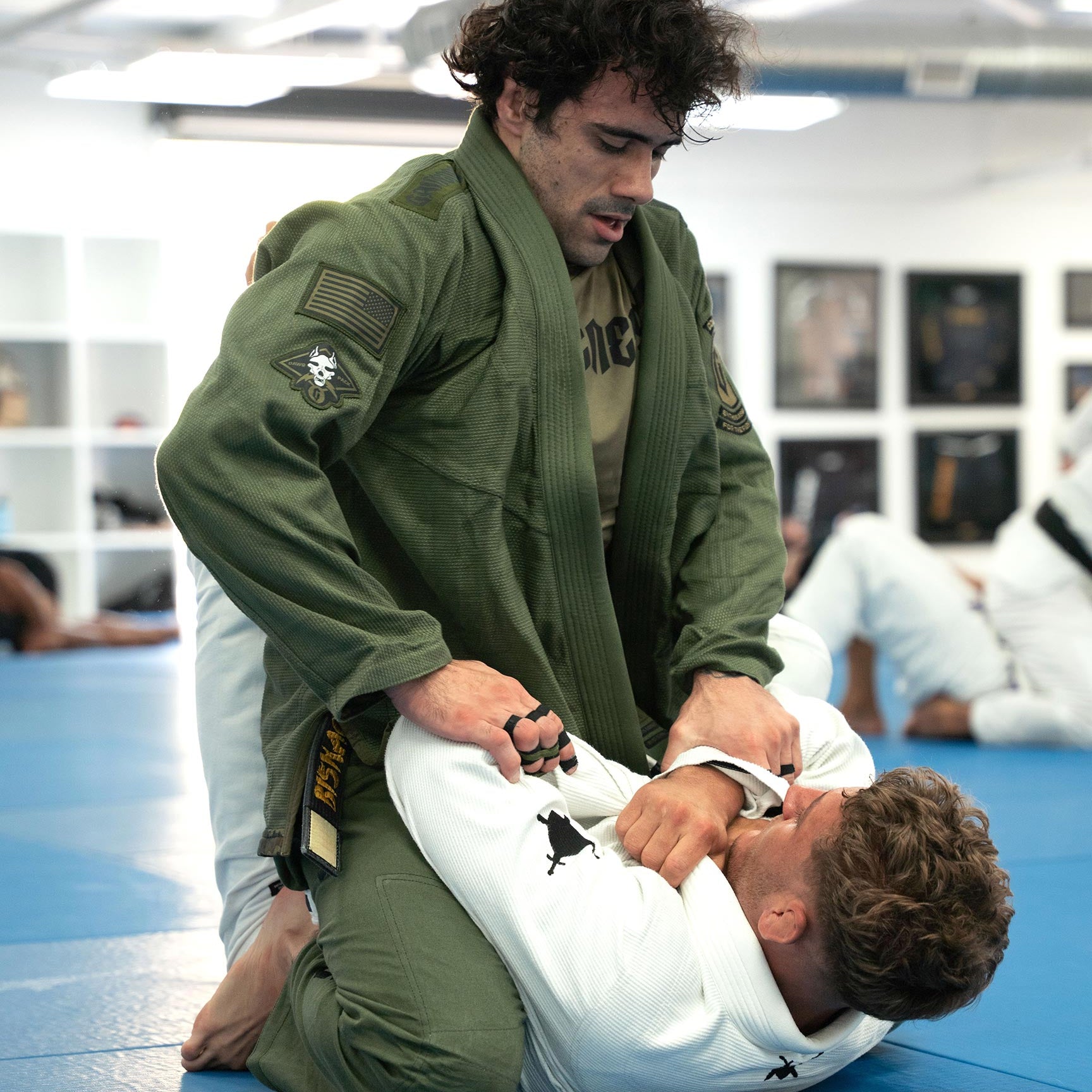
Headquarters is one of the most useful positions for drilling because it appears constantly in gi sparring. Have your partner stand with one of your legs trapped between theirs and the other leg controlled or pushed aside. Their goal is to pass using knee cut, leg drag, or pressure around your legs. Your goal is to maintain frames, recover your knee line, and return to an attacking guard.
Give yourself a clear win condition. You score a recovery when you establish a meaningful guard connection, such as closed guard, butterfly hooks, De La Riva, knee shield, or both feet inside at the hips. The passer scores only when they secure side control or mount for three seconds. That prevents the drill from becoming a vague scramble where nobody knows whether the rep worked.
For beginners, start with the passer on both knees or with limited grips. More advanced students can begin from standing with full grips and realistic pressure. The position is demanding enough that even a black belt benefits from controlled rounds here.
Torreando and outside-angle drill
The torreando pass exposes a frequent retention mistake: chasing the opponent with your hands while your hips stay flat. Start with your partner holding both pant legs or controlling near your ankles. They circle toward one side, then the other, looking to get past your knees.
Use your arms as frames, but make your hips do the real work. Shift your body toward the direction they are moving, bring the far leg across to block, and recover your feet inside. If they beat your legs to one side, do not keep reaching for a grip that is already gone. Turn toward them and use the near-side shin as a shield while you rebuild guard.
In no-gi, use the same drill with ankle control, wrist control, or light collar-tie pressure rather than pant grips. The passing mechanics change slightly, but the body positioning does not.
Add Decisions Before You Add Speed
The most useful open guard retention drills include choices. A passer rarely repeats the same pass on command during a live round, so the bottom player should learn to read cues rather than memorize a script.
Try a three-option drill from seated or supine guard. The passer can attempt an outside pass, a knee cut, or a body-lock-style close-range entry. The guard player must respond by recovering inside position and choosing an appropriate guard. Outside pressure may call for a shin-to-shin or De La Riva connection. A close knee cut may call for knee shield half guard. If the passer crowds both knees and leans forward, butterfly hooks and upper-body frames may be more reliable.
Keep the pace around 50 to 70 percent at first. Going hard too early usually produces frantic scrambling, stiff arms, and poor habits. Once both partners can identify the positions, increase resistance in short rounds of 30 to 60 seconds. Switch roles often. Passing better makes you better at retaining because you start recognizing the cues that good passers use.
Common Problems That Make Retention Harder
The first is trying to retain guard with straight legs. Extended legs can create distance, but they are easy to steer. Keep enough bend in your knees that you can retract, pummel, and place your feet where they are needed.
The second is accepting a flat back. If your shoulders and hips are square to the ceiling while the passer gets an angle, they are doing most of the work for you. Use your hips early. A small pivot often beats a dramatic late inversion.
The third is treating grips as the guard itself. Strong sleeve or collar grips help in the gi, but grips break. Your knees, elbows, head position, and frames must still function when a sweaty training partner strips your hands. In no-gi especially, build drills around body position first and hand control second.
Finally, do not confuse flexibility with retention skill. Flexible grapplers can sometimes throw a leg back into the path of a pass from unusual angles. That can be useful, but timing and structure are more dependable. A hobbyist with average flexibility and solid frames can retain effectively against larger training partners.
How to Fit These Drills Into Training
You do not need a separate hour devoted to guard retention. Pick one movement drill for warm-ups, then spend 10 to 15 minutes on a specific passing scenario before positional sparring. For example, an academy class focused on knee-cut passing can pair perfectly with knee-elbow connection reps and headquarters rounds.
If you train two or three times per week, choose one retention theme for several weeks instead of jumping between every modern guard system. You will notice more progress from repeatedly solving the same knee-cut or torreando problem than from collecting a dozen techniques you have not pressure-tested.
During open mat, ask a trusted partner to start in your weak position. If leg drags consistently give you trouble, begin there for five short rounds. That is more productive than waiting for the position to appear during a long roll, especially when your usual sparring habits let you avoid it.
The goal is not to become impossible to pass. Everyone gets passed, including high-level competitors. The real payoff comes when a near-pass becomes a recoverable exchange, and you recognize the moment to rebuild your guard before your partner can settle their weight.
Shop Our New Releases
Fast & Free Shipping!
Fast & Free Shipping!
Fast & Free Shipping!
Fast & Free Shipping!
Fast & Free Shipping!

Fast & Free Shipping!