How to Retain Open Guard When Passing Starts
A good open guard rarely feels comfortable once your training partner starts passing with intent. Their grips get connected, their posture comes forward, and suddenly your feet feel far away. Learning how to retain open guard is less about finding one magic hook and more about recognizing danger early, managing distance, and recovering before the pass becomes settled side control.
For newer students, this can be frustrating because open guard often looks like a collection of cool positions: De La Riva, butterfly, collar sleeve, reverse De La Riva, and more. In live rounds, though, the positions are connected by a few simple defensive habits. If those habits are missing, even your favorite guard will collapse under steady pressure.
How to Retain Open Guard Starts With Distance
Open guard retention is fundamentally a distance problem. If your opponent is standing, kneeling, or driving forward, you need enough structure between their hips and yours to stop them from clearing your legs. Your feet, knees, hands, and frames all help create that structure.
A useful rule is to keep at least one meaningful connection. That could be a foot on the hip, a shin across the torso, a butterfly hook inside the thigh, a De La Riva hook around the leg, or a strong sleeve-and-collar connection in the gi. When both of your legs are hanging free and your hands are reaching, you are usually a step behind.
Think about a common sparring situation: you play seated guard, your partner grabs your ankles, and they start circling to their right. Do not wait until they have cleared both legs to react. Turn onto the hip facing them, bring your knees between your bodies, and use a foot or shin to redirect their approach. The goal is not necessarily to sweep immediately. First, make them deal with your legs again.
Distance changes quickly, especially against a pressure passer. Long-range open guard may become a knee shield or butterfly half guard. A guard retention win does not always mean returning to the exact position you started in. It means preventing the pass and getting back to a guard you can work from.
Keep Your Knees Pointed at the Threat
Your knees are often more important than your feet. Feet can be pushed aside, dragged, or pinned. Knees are the barriers that keep an opponent from reaching your hips and chest.
When someone circles around your guard, rotate your hips so your knees continue to face them. This is sometimes called following the passer. If they move to your left, your hips should turn left with them. If they switch directions, do not stubbornly hold onto an old grip while your torso stays flat. Let go when needed, square up, and rebuild.
This is easy to understand and harder to do under fatigue. In the last minute of a hard round, many people extend their legs straight and try to push the passer away. That works briefly, but straight legs become easy to staple or toss aside. Bent knees give you the ability to pummel your feet back inside, frame, and move your hips.
A simple drilling example is to have a partner stand in front of your supine guard and move side to side without passing. Your job is to keep your knees aimed toward their centerline while using small hip scoots and shoulder movement. Start slowly. Then have them change pace and direction. This teaches the tracking skill that shows up in nearly every open guard exchange.
Do Not Accept Flat Hips
A flat back makes retention much harder. When both shoulders and hips are pinned to the mat, your legs lose range and your opponent can begin controlling your upper body. Being on your side gives you room to frame, insert hooks, and recover.
If a passer beats one of your legs, turn toward them instead of away from them. Use your near-side elbow and forearm as a frame while your far leg searches for the hip, bicep, or inside position. In a gi round, a sleeve grip can buy time here. In no-gi, a wrist connection or elbow frame may be enough. The grip matters less than keeping their chest from settling onto yours.
Frame Before You Reach for Grips
Many guard passes succeed because the bottom player reaches for a grip after their frames are already gone. A collar grip, pant grip, or wrist control can be useful, but it will not stop a passer who has chest-to-chest pressure and crossface control.
Frames give you the space to use grips. Place your forearm across the collarbone or shoulder line, your hand at the bicep, or your shin between their body and your hips. Keep your elbows connected enough that they cannot simply swim inside and collapse your structure.
For example, when an opponent is trying to smash through a knee shield, do not focus only on pulling their sleeve. First, use the knee shield and top-side forearm to maintain the wedge. Then use your grips to off-balance them, create an underhook, or recover a fuller guard. If the wedge disappears, your next job is usually survival rather than offense.
There is a trade-off here. Over-framing with stiff, extended arms can expose your elbows and drain your energy. Your frames should create a temporary barrier, not become a bench press. Frame, move your hips, and replace the guard.
Use Angles Instead of Pushing Straight Back
Open guard retention gets much easier when you stop trying to move an opponent directly backward. Most passers are strongest when they can drive in a straight line. Your hips should move off that line.
A small hip escape can turn a nearly passed guard into a recoverable position. If your partner is clearing your right leg for a toreando-style pass, scoot your hips to the left as you turn toward them. Your left knee can come across as a shield while your right leg circles back inside. This is not a huge movement. Often, a few inches are enough to put your legs back in front of their hips.
The same idea applies against knee-cut pressure. If their knee is slicing across and your bottom leg is trapped, getting your shoulders onto your side and creating an angle may allow you to insert a butterfly hook or recover a knee shield. Trying to force them backward with both arms usually feeds the pressure they want.
Good guard players look mobile because they are constantly making small corrections. They do not wait for a dramatic escape. They adjust before the passer establishes control.
Learn to Pummel Your Legs Back Inside
Leg pummeling is one of the most useful guard retention skills you can drill. When a passer moves one of your legs outside their body line, your job is to circle that leg back inside before they settle past it.
Picture someone attempting a leg-drag pass. They pull your right leg across their body and begin controlling your hips. Your immediate response is not necessarily to hang onto a grip with both hands. Turn toward them, use your free leg to frame or hook, and circle the dragged leg back toward the inside. Even if you recover only to half guard, you have denied the clean pass.
During positional sparring, start with your partner holding a loose leg-drag or headquarters-style position. Give yourself a short objective: recover any guard without coming up to wrestle. This isolates the pummeling and hip movement that can get lost during a full round.
Be realistic about position, too. If your partner has controlled both ankles, pinned your hips, and is already past your knee line, forcing open guard recovery may be the wrong choice. Transition to your best late-stage defense: a knee-elbow connection, turtle if appropriate for your game, or a frame-and-hip-escape recovery. Retention is a chain of decisions, not one move.
Build Retention Into Regular Training
You will improve faster by training guard retention as a distinct skill rather than hoping it appears during open mat. Ask a trusted partner to begin rounds from standing or headquarters with the goal of passing while you focus only on keeping guard. Start at 50 to 60 percent intensity so you can notice when your knees drift away, when you stay flat, or when you chase grips too long.
Then add specific rounds. One round might begin with a toreando grip; another with a knee-cut entry; another with your partner already halfway through a leg drag. These positions expose different gaps. A flexible passer may force you to track side to side, while a heavier training partner will test your frames and ability to create angles.
Competition rounds provide another useful test. When points matter, a passer may stay patient after getting around your legs instead of rushing into a submission. Treat that moment seriously. If they have passed your knee line but have not yet secured side control, keep framing and moving. Many points are lost because the bottom player mentally accepts the pass before it is actually complete.
Open guard retention will never be perfect. Skilled passers will get through, and some rounds will feel like you are rebuilding guard every ten seconds. That is normal. Stay connected, keep your knees between you and the passer, and recover the next layer of guard before they can settle.
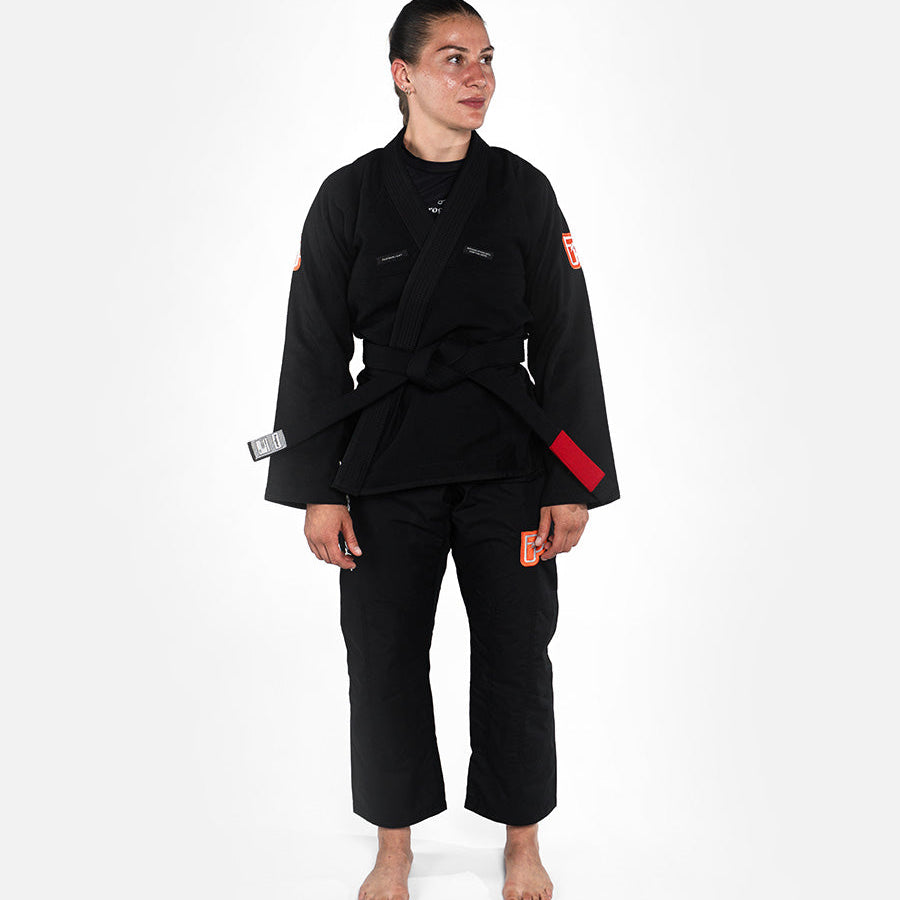
Shop Our New Releases
Fast & Free Shipping!
Fast & Free Shipping!
Fast & Free Shipping!
Fast & Free Shipping!
Fast & Free Shipping!
Fast & Free Shipping!